

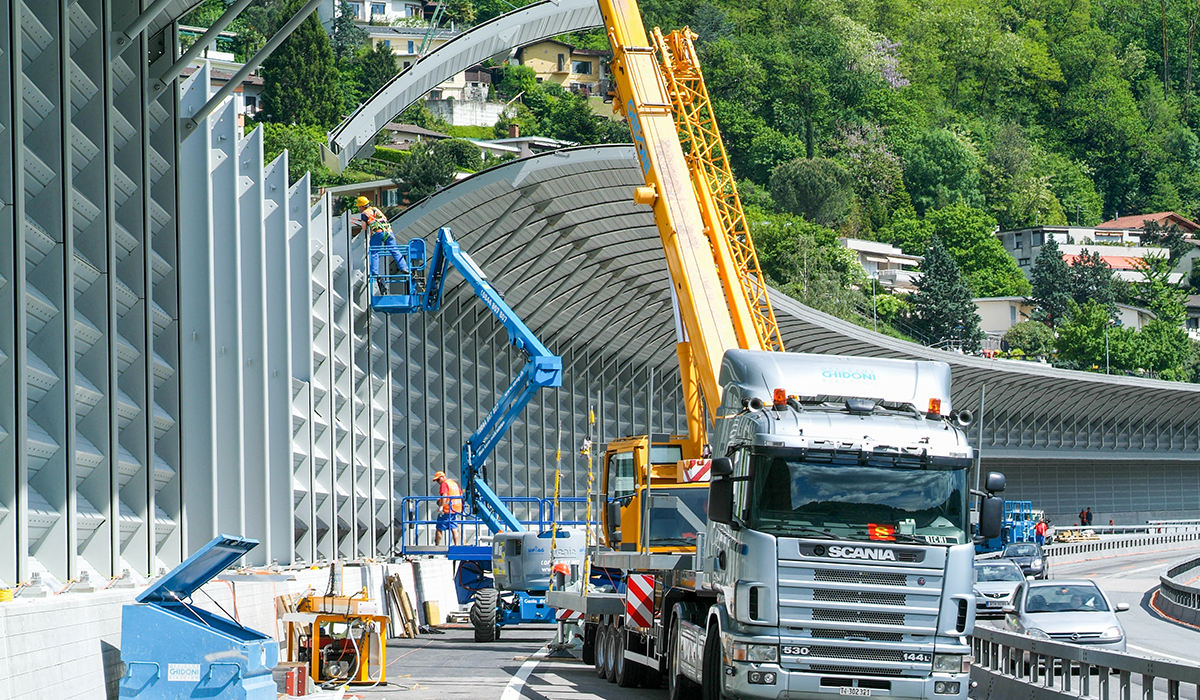
Construction in Singapore is almost impossible to avoid.
New residential blocks rise, MRT lines expand, roads get upgraded, and older buildings are constantly being redeveloped. It’s part of how the city keeps evolving.
But there’s one major challenge that comes with all this activity: space is limited, and everything is close together.
That’s where sound barriers in Singapore become more than just a supporting feature on a construction site. It becomes a practical necessity for managing how construction fits into daily life.
Why Noise Is a Bigger Challenge in Singapore
Unlike places where construction sites can be isolated from surrounding activity, Singapore is extremely dense.
A single project might sit right next to:
- High-rise apartments
- Schools and childcare centres
- Offices and commercial buildings
- Busy pedestrian walkways
This means construction noise doesn’t stay within the site for long. It travels quickly into spaces where people live and work.
Even routine activities like drilling, cutting, or piling can feel amplified simply because there’s very little distance for sound to fade naturally.
So the challenge isn’t just noise—it’s proximity, timing, and constant exposure.
How Sound Barriers Help Control Noise in Tight Spaces
A construction sound barrier is one of the most commonly used tools to manage noise in these environments.
It works by:
- Blocking direct sound paths between the site and surrounding buildings
- Absorbing part of the noise energy
- Reducing how far sound can travel in open directions
In simple terms, it doesn’t stop construction noise entirely, but it reduces how “sharp” and “direct” it feels to people outside the site.
In tight urban spaces, that reduction matters a lot. Even a small drop in intensity can be the difference between “disturbing” and “barely noticeable.”
Why Space Constraints Change How Barriers Are Used
In Singapore, construction sites don’t usually have large buffer zones or empty land around them.
This forces contractors to be more intentional with placement.
A temporary acoustic barrier is often installed:
- Very close to active work zones
- Along tight site perimeters
- In layered setups combined with hoarding or fencing
- In sections that change as the project progresses
Because the layout is limited, noise control has to be precise. There’s no extra space to “buffer” sound naturally, so the barrier itself becomes the buffer.
This is why positioning is often more important than the material alone.
Common Ways Sound Barriers Are Used on Sites
In real projects, sound barriers are not installed as a single fixed wall. They are used more like a flexible system.
Along Site Perimeters
This is the most visible application, especially in residential areas. It helps reduce the direct escape of noise into nearby homes and walkways.
Around High-Noise Equipment
Generators, compressors, and piling machines often produce continuous or high-impact noise. Barriers are placed close to these sources to contain sound at the point of origin.
Near Active Work Zones
When certain tasks become temporarily loud, portable barriers are used to isolate those specific areas instead of enclosing the entire site.
This approach makes noise control more efficient because it focuses only on where the problem actually is.
Managing Noise Without Slowing Down Work
One of the key realities in Singapore is that construction timelines are tight.
Projects still need to move quickly, even with strict environmental expectations.
That’s why a sound barrier system is usually part of a bigger coordination effort that includes:
- Planning noisy activities within permitted hours
- Sequencing work so high-impact tasks are grouped efficiently
- Using equipment that reduces unnecessary noise output
- Positioning work zones strategically within a limited space
The barrier supports this system, but it doesn’t replace planning. It works alongside it.
The Importance of Adaptability on Active Sites
Construction sites in Singapore change constantly as projects progress.
A single area might shift from excavation to structural work to finishing within a few phases.
Because of this, noise control systems need to move with the work.
A temporary acoustic barrier is often:
- Relocated as machinery moves
- Expanded during high-noise phases
- Reduced when quieter work begins
- Reconfigured as site layouts tighten or open up
This flexibility is important because a fixed system would quickly become ineffective in such a dynamic environment.
Why Public Sensitivity to Noise Is Higher in Singapore
In dense urban living, people don’t experience construction from a distance—they experience it up close.
That leads to higher sensitivity toward:
- Early morning or prolonged noise
- Repetitive mechanical sounds
- Sudden loud impacts during the day
Because of this, visible noise-control measures, such as barriers, play an important psychological role as well.
When people see a site actively managing noise, it creates a sense that the project is being handled responsibly, even if construction is still disruptive at times.
Final Thoughts
Managing construction noise in Singapore is not just about reducing volume—it’s about managing impact in very tight, shared spaces.
That’s why a sound barrier in Singapore is such a critical part of modern construction practices.
When applied properly, it helps:
- Reduce how directly the noise reaches surrounding buildings
- Improve comfort for nearby residents and workers
- Support smoother, more controlled project execution
In the end, it reflects a simple reality of urban construction: development and daily life will always exist side by side, so the goal is to make that coexistence as manageable as possible.
Comments are closed.