

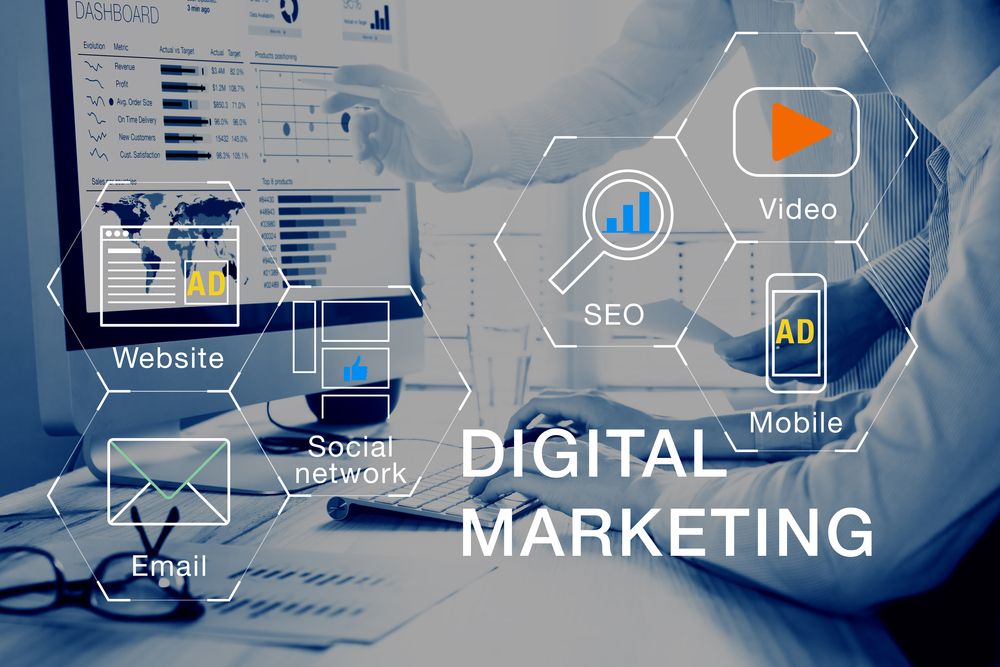
Digital marketing continues to evolve at a rapid pace, shaped by changing consumer expectations, emerging technologies, and shifting platform algorithms. Businesses that adapt early often gain stronger visibility, deeper engagement, and measurable growth advantages.
This article highlights the most impactful digital marketing trends businesses must follow to remain competitive and relevant in 2026 and beyond.
The Growing Importance of AI-Powered Marketing 🤖
Artificial intelligence is no longer experimental—it is now a central part of modern marketing strategy.
Businesses are increasingly using AI to:
- Personalize customer experiences at scale
- Predict customer behavior patterns
- Automate campaign optimization
- Generate marketing content faster
- Improve customer support through smart chat systems
AI-driven personalization helps brands deliver the right message at the right time, which significantly improves conversion rates and customer satisfaction.
Companies adopting AI early typically see better campaign efficiency and reduced operational costs.
Voice Search Optimization Is Becoming Essential 🎙️
With the rising popularity of voice assistants and smart devices, voice search is transforming how users find information online.
Voice search queries are usually:
- Longer
- Conversional
- Question-based
- Intent-focused
Businesses should optimize their content by:
- Targeting natural language keywords
- Adding FAQ-style sections
- Improving mobile usability
- Strengthening local SEO strategies
Optimizing for voice search increases visibility among users who rely on hands-free digital interaction.
Short-Form Video Content Dominates Engagement 🎥
Short-form videos continue to outperform most content formats across social platforms.
Consumers prefer video content because it is:
- Quick to consume
- Easy to understand
- Highly engaging
- Shareable
Businesses should prioritize:
- Educational micro-videos
- Product demonstrations
- Behind-the-scenes clips
- Customer testimonials
Short-form video strengthens brand recall and increases audience retention dramatically.
First-Party Data Is the Future of Customer Insights 📊
Privacy regulations and the decline of third-party cookies are changing how marketers collect user data.
Businesses must now focus on building first-party data ecosystems, such as:
- Email subscriptions
- Loyalty programs
- Interactive surveys
- Website engagement tracking
First-party data provides more reliable insights while maintaining customer trust.
Brands that prioritize transparent data practices often achieve stronger long-term relationships with their audience.
Search Intent Optimization Beats Keyword Stuffing 🔍
Modern search engines prioritize content that matches user intent, not just keyword frequency.
Businesses should shift focus toward:
- Solving real customer problems
- Creating structured informational content
- Answering direct questions clearly
- Improving readability and usefulness
Intent-driven content ranks higher and performs better over time.
Influencer Partnerships Are Becoming More Authentic 🤝
Consumers increasingly trust real voices over branded messaging.
Micro-influencers are especially valuable because they:
- Build stronger niche communities
- Deliver higher engagement rates
- Feel more authentic to audiences
- Generate cost-effective results
Businesses should collaborate with influencers who align closely with their brand identity and audience expectations.
Omnichannel Marketing Improves Customer Experience 🌐
Customers interact with brands across multiple platforms before making purchasing decisions.
An effective omnichannel strategy ensures consistency across:
- Social media platforms
- Email campaigns
- Search engines
- Websites
- Messaging apps
Consistency builds trust and reduces friction during the customer journey.
Businesses that maintain unified messaging across channels typically achieve higher retention rates.
Conversational Marketing Enhances Customer Relationships 💬
Modern consumers expect fast responses and personalized communication.
Conversational marketing includes:
- Live chat support
- Messaging apps
- Chatbots
- Interactive landing pages
These tools create immediate engagement opportunities and guide users toward faster decision-making.
Businesses that respond quickly often outperform competitors in conversion speed.
Sustainable and Purpose-Driven Branding Matters More Than Ever 🌱
Consumers increasingly support brands that demonstrate social responsibility and transparency.
Purpose-driven marketing includes:
- Ethical sourcing communication
- Environmental commitments
- Community involvement
- Inclusive messaging
Authenticity is critical. Customers quickly recognize when brands communicate values genuinely rather than performatively.
Interactive Content Is Driving Higher Engagement 📈
Static content alone is no longer enough to maintain audience attention.
Interactive content formats include:
- Polls
- Quizzes
- Calculators
- Interactive infographics
- Live webinars
These formats encourage participation and increase time spent with your brand.
Higher engagement often translates into stronger customer loyalty.
FAQ: Digital Marketing Trends Businesses Must Follow
1. Why should businesses update their digital marketing strategy regularly?
Because consumer behavior, algorithms, and technologies change frequently. Updating strategies ensures continued visibility and competitiveness.
2. How does AI improve marketing campaign performance?
AI analyzes large datasets quickly, allowing marketers to personalize campaigns, predict trends, and optimize results in real time.
3. Is video marketing necessary for small businesses?
Yes. Even simple short-form videos can significantly improve engagement and help businesses connect with audiences more effectively.
4. What role does customer data play in digital marketing success?
Customer data helps businesses understand preferences, improve targeting accuracy, and deliver personalized experiences.
5. How can businesses start implementing omnichannel marketing?
They can begin by aligning messaging across major platforms like email, social media, and websites while maintaining consistent branding.
6. Are micro-influencers better than celebrity influencers?
Micro-influencers often produce higher engagement rates because their audiences trust them more and view their recommendations as authentic.
7. What is the biggest digital marketing trend businesses should prioritize first?
Personalization powered by AI and first-party data is currently one of the most impactful trends for improving customer engagement and conversions.
Comments are closed.